
December 28, 2025
DIY vs. Professional Stone Polishing: Pros and Cons
Compare DIY and professional stone polishing—costs, tools, risks, and results—to choose the right approach for small touch-ups or major restorations.
Compare DIY and professional stone polishing—costs, tools, risks, and results—to choose the right approach for small touch-ups or major restorations.
Stone polishing keeps surfaces like marble, granite, and travertine shiny and durable. When deciding between DIY and professional polishing, here’s what you need to know:
| Factor | DIY Polishing | Professional Polishing |
|---|---|---|
| Cost | $150–$500 | $500–$2,500+ |
| Time Required | High; requires effort and research | Low; handled efficiently by experts |
| Risk | High; mistakes can be costly | Low; experts minimize risks |
| Results | Surface-level improvements | Long-lasting, flawless finish |
| Tools | Basic or rented equipment | Industrial-grade machinery |
For small, low-risk tasks, DIY is a practical choice. For larger, high-value projects, professional polishing ensures better results and protects your investment.
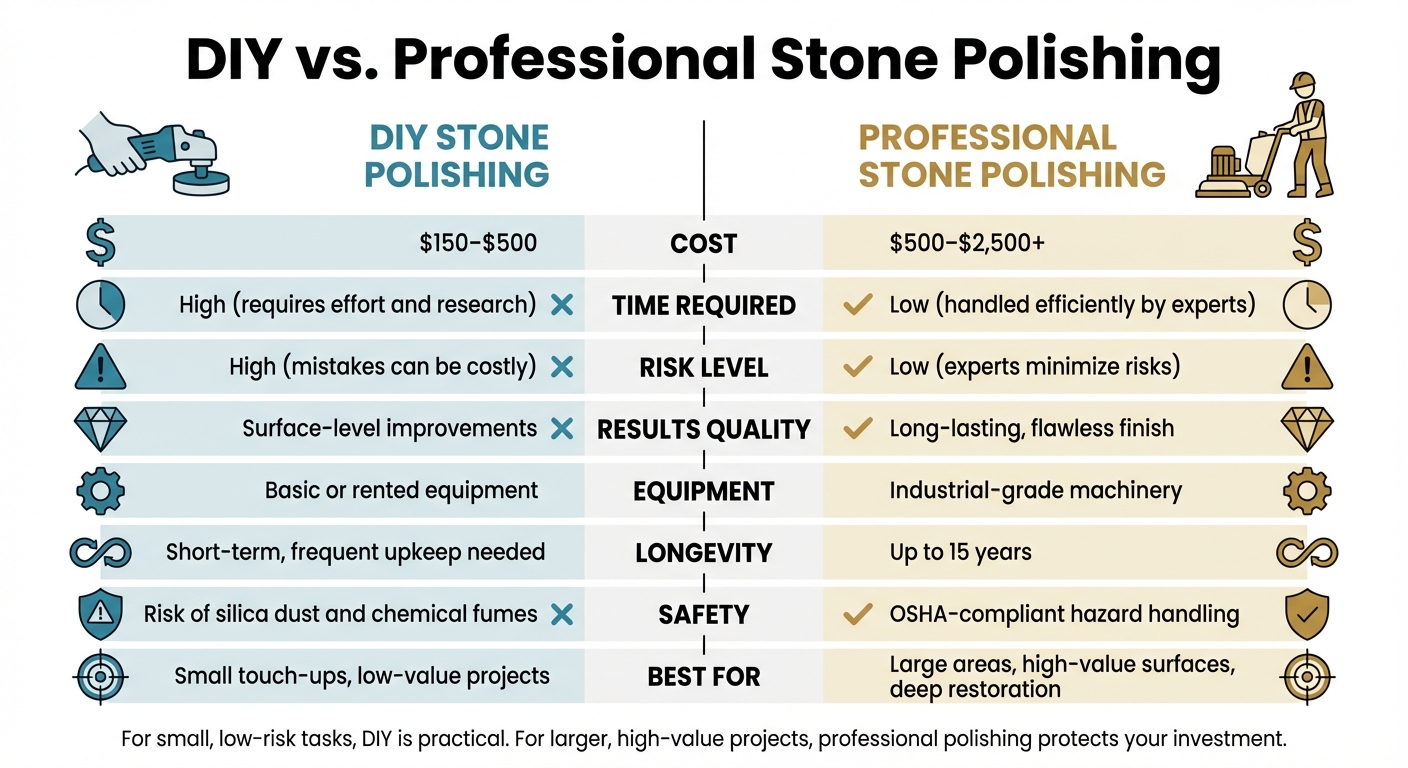
DIY vs Professional Stone Polishing Comparison Chart
Polishing your stone surfaces at home requires the right tools and a bit of know-how. For larger areas, a variable-speed wet polisher (operating between 800 and 3,500 RPM) is essential, while smaller tasks can be tackled with a variable-speed drill. The process involves using diamond resin pads that gradually increase in grit, starting from 50 and going up to 3,000. Each grit removes the scratches left by the previous one, and skipping a step can result in marks that even polishing compounds can't fix. For the final touch, polishing powders like tin-oxide (for granite) or oxalic-acid (for marble) bring out the shine.
You'll also need to prep your workspace with materials like 4 mil plastic sheeting, painter's tape, microfiber cloths, and a HEPA-filtered shop-vac to manage the slurry. Safety is non-negotiable: N95 or P100 respirators protect against silica dust, and you’ll need safety glasses, ear protection, and cut-resistant gloves. With this foundation, let’s take a closer look at the perks and pitfalls of DIY stone polishing.
One of the biggest upsides of polishing your stone surfaces yourself is the cost savings. For instance, a 30-square-foot kitchen project typically costs around $350 in DIY supplies and tool rentals, compared to $600–$1,000 for hiring a professional.
"The majority of the expense is in the labor to do the job rather than in the polishing material, there is significant savings in doing the work yourself!" - Doctor Granite from Going Granite
DIY also gives you the freedom to work on your schedule and provides hands-on insight into maintaining your stone surfaces.
However, DIY stone polishing is not without its hurdles. The learning curve can be steep, and mistakes can be costly. For example, using the wrong tools, like drills with diamond pads, can create circular grooves or uneven finishes.
"If you leave small grooves, tinier than the thickness of a piece of hair, you will see them as you start to achieve a high polish" - Tim Carter, Tribune Media Services
Skipping grit levels can result in deep scratches that become "baked" into the stone, making them impossible to remove with polishing compounds. And while the process might sound straightforward, polishing concrete floors, for instance, often takes about 12 hours of active work spread over three days.
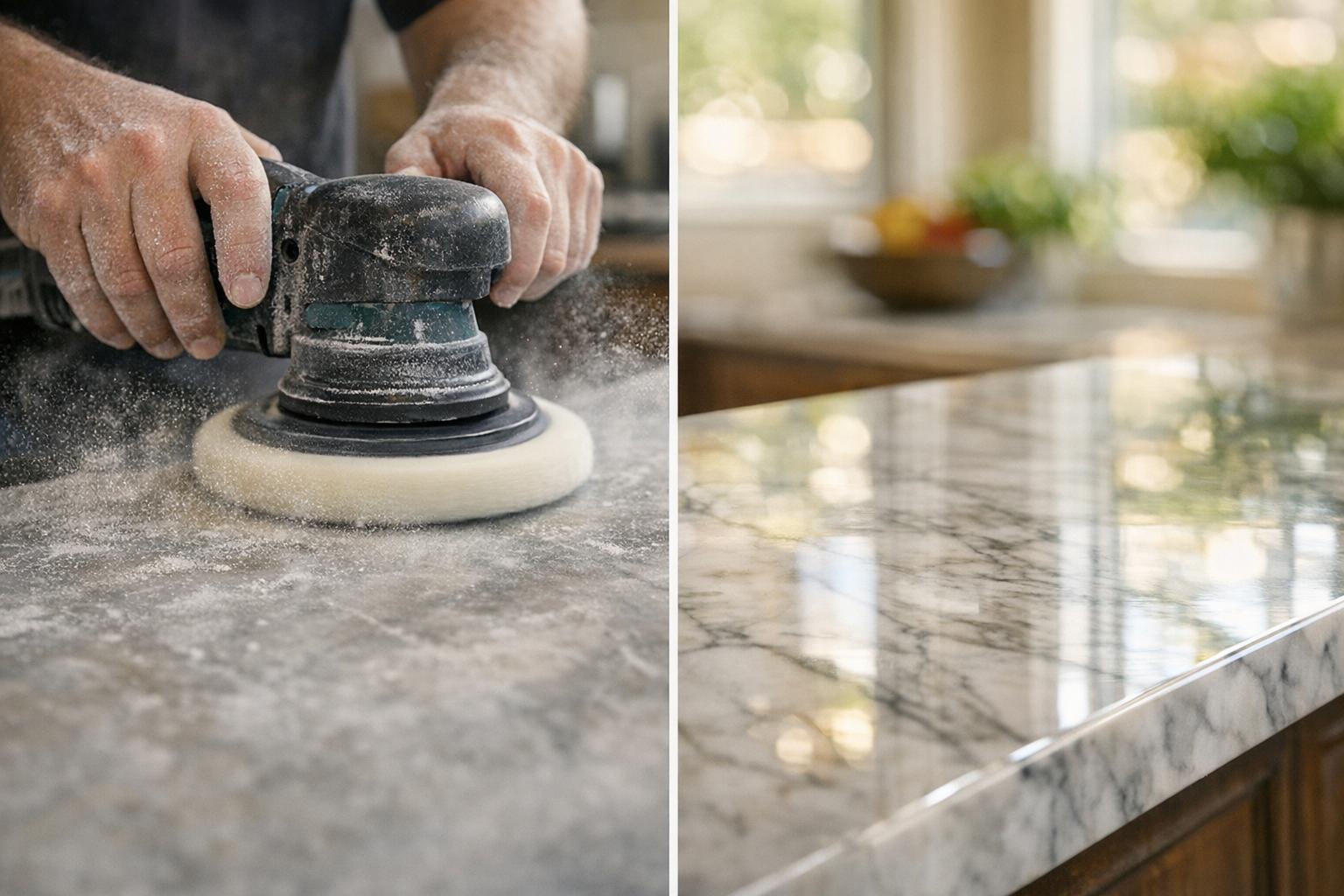
There are also hidden costs to consider. A variable-speed wet polisher can set you back $180 to $350, diamond pads cost $8–$15 each, and you'll need several pads to complete the process. Safety is another concern. Dry polishing generates hazardous silica dust, while wet polishing creates a messy slurry that requires extensive masking of walls and cabinets. These challenges make DIY a better fit for smaller jobs, leaving larger projects to the pros.
Here’s a quick breakdown of the pros and cons of taking on a DIY stone polishing project:
| Aspect | DIY Pros | DIY Cons |
|---|---|---|
| Cost | Saves around $250–$650 on labor for small projects; may use existing tools like drills. | High rental costs for floor grinders and ongoing expenses for diamond pads. |
| Skill Level | A chance to learn stone restoration; manageable for small tasks like edges or test pieces. | Steep learning curve; mistakes like etching or "blistering" from improper chemicals. |
| Safety | Safe with proper PPE, such as respirators and goggles. | Risk of silica dust exposure and creating dangerously slippery surfaces. |
| Results | Can achieve near-professional results on minor scratches. | Professional-quality clarity is hard to match; issues like "lippage" (uneven tiles) may arise. |
| Time | Allows for a flexible schedule and focus on specific areas. | Time-intensive; requires multiple passes with over seven grit levels. |
Professional stone polishing offers a level of precision and expertise that DIY methods simply can't match. By hiring experts, you're tapping into the power of industrial-grade tools - like diamond-pad polishing machines, high-pressure steam cleaners, and dustless systems - that aren't typically available to homeowners. These tools deliver a flawless, mirror-like finish while keeping your home clean during the process. Beyond the equipment, professionals bring an in-depth understanding of different stone types - be it marble, granite, or limestone - and use pH-balanced products to avoid potential damage like etching or discoloration caused by harsh cleaners. This meticulous approach not only enhances the look of your stone but also addresses issues that DIY methods often can't resolve.
Experts don't stop at surface-level fixes. They can tackle deep-seated problems, such as removing embedded dirt and stains or repairing cracks and chips. Techniques like honing and patching restore the structural integrity of your stone. Their multi-step process ensures a durable finish, with granite surfaces often requiring professional polishing only every 5 to 15 years, depending on usage and foot traffic.
"Restoring fine stone surfaces is a combination of art and science." - Grout and Stone Services
The biggest advantage of professional stone polishing is the superior and lasting quality of the results. For example, diamond grinding is widely regarded as one of the most durable finishes for natural stone floors. Professionals can address issues like lippage (uneven tile edges) and deep scratches that DIY solutions often fail to fix, leaving your stone looking as good as new. Additionally, their powerful equipment allows them to handle large-scale projects much faster than any DIY approach.
Safety is another key benefit. Trained professionals know how to manage slip hazards, apply slip-resistant treatments, and handle potentially dangerous materials like silica dust and chemical fumes, all while following OSHA guidelines. While the upfront cost may be higher, professional polishing can prevent irreversible damage - such as surface burns or cracks - that could otherwise lead to costly full-stone replacements.
"Professional stone care consistently outperforms amateur efforts in quality, longevity, and value." - Statewide Stone Care
Despite its many advantages, professional stone polishing does have some downsides. The most obvious one is cost. Diamond grinding, for instance, is one of the most expensive methods due to its labor-intensive process. For homeowners on tighter budgets, this can make professional services feel out of reach, especially for smaller projects where DIY might seem more practical.
Another drawback is the disruption it can cause. Wet polishing, in particular, produces a lot of spray and slurry, requiring protective measures like plastic sheeting to safeguard walls, furniture, and cabinets. Some techniques, such as crystallization, might also lead to yellowing in certain stones or discoloration of light-colored grout. Additionally, professional polishing often requires clearing the area and scheduling several days for the team to complete the work, especially for complex tasks. For those who enjoy hands-on home improvement, the hands-off nature of hiring professionals might feel less rewarding.
"A single mistake, like using an abrasive scrubber on soft limestone, could cost hundreds more than a pro's service fee." - Statewide Stone Care
| Aspect | Professional Pros | Professional Cons |
|---|---|---|
| Expertise | Accurate stone identification, pH-balanced chemical selection, and specialized honing techniques. | Homeowners have less direct control over the techniques used. |
| Equipment | Utilizes industrial-grade diamond abrasives, high-pressure steam, and dustless systems. | Heavy machinery can be noisy and requires ample space. |
| Outcome | Eliminates deep scratches and lippage, restoring a factory-like shine that lasts 5–15 years. | Over-polishing can lead to slippery surfaces. |
| Cost | Prevents expensive repairs and full-stone replacement. | Higher upfront labor costs make diamond grinding the priciest method. |
| Time | Completes large projects quickly with powerful equipment. | Requires scheduling and significant preparation time (often several days). |
| Safety | Professionals manage hazardous materials and apply slip-resistant treatments in line with OSHA guidelines. | Wet polishing creates mess and demands extensive site preparation. |
When choosing between DIY and professional stone polishing, the first thing most people consider is cost. DIY projects generally cost between $150 and $500 for tools and materials, while professional services can range from $500 to over $2,500. However, those initial savings with DIY can be deceiving. As Capitol Stone Care notes, "What started as a $50 DIY project can quickly snowball into hundreds - or even thousands - of dollars in corrective work". But cost isn’t the only factor to weigh; time commitment and overall results differ significantly between the two options.
Time and effectiveness are also major considerations. DIY polishing demands a lot of effort and research to understand the right techniques for your specific type of stone. On the other hand, professionals use advanced tools like industrial rotary machines and diamond abrasive pads to handle large projects quickly, delivering a flawless, mirror-like finish. These professional results, when properly maintained, can last up to 15 years.
Another critical factor is the risk involved. DIY methods carry a higher chance of mistakes like surface burns, chemical etching, or even structural damage such as grooves. Professionals, with their training and expertise, reduce these risks by using pH-balanced cleaners and methods tailored to the unique needs of each stone type, whether it’s marble, granite, or limestone.
The equipment needed also sets DIY apart from professional services. While DIYers rely on basic tools like mops, sponges, or rented buffers, professionals use industrial-grade machinery, including rotary machines, diamond abrasive pads, and high-pressure steam cleaners. Renting such equipment adds not only to the cost but also to the complexity, and improper use can lead to uneven finishes that might even harm your property’s value.
| Factor | DIY Polishing | Professional Polishing |
|---|---|---|
| Upfront Cost | $150–$500 for supplies/rentals | $500–$2,500+ for labor/expertise |
| Equipment | Basic tools or rented buffers | Industrial rotary machines, diamond pads |
| Time Investment | High; requires research and effort | Low; handled efficiently by experts |
| Risk of Damage | High; potential for permanent damage | Low; professionals use safe, tailored methods |
| Effectiveness | Surface-level; removes light scratches | Deep restoration; eliminates stains and unevenness |
| Longevity of Results | Short-term; frequent upkeep needed | Long-term; results last up to 15 years |
| Safety | Risks include silica dust and chemical fumes | OSHA-compliant handling of hazards |
| Overall Value | Low upfront cost, but costly mistakes likely | Higher cost, but prevents expensive repairs |
These factors highlight the trade-offs between the two approaches, helping you decide which option aligns better with your stone polishing goals.
If you're tackling a small, low-risk project, DIY stone polishing can be a practical and cost-effective option. For example, if your granite countertop is starting to look a little dull or you want to freshen up a small entryway, DIY methods can handle these minor tasks without breaking the bank.
DIY is particularly suited for routine maintenance. Using pH-neutral cleaners and simple polishing creams on smaller surfaces can keep them looking their best without much hassle.
However, it's important to steer clear of DIY polishing for more delicate stones like marble, limestone, or travertine. These materials are prone to acid etching and can be easily damaged by abrasive tools.
"DIY stone polishing attempts can lead to uneven surfaces, damage, and costly mistakes." - Chris John from Sureshine
In short, DIY works well for minor touch-ups and maintenance, but anything beyond that might require professional expertise.
When you're dealing with larger or more complex projects, professional stone polishing is the way to go. Issues like deep scratches, etching, lippage, or cracks demand industrial-grade tools such as diamond-pad polishing machines and high-pressure steam cleaners - equipment that's typically out of reach for DIY enthusiasts.
Companies like Skyline Tile bring the expertise and tools needed for large-scale projects. Their multi-step restoration process includes grinding, honing, polishing, and sealing to achieve a mirror-like finish that can last up to 15 years. They even back their work with a 5-year workmanship warranty, offering peace of mind for homeowners investing in high-end materials like marble countertops or expansive travertine floors.
Professional services become even more critical for spaces like kitchens and bathrooms, where precision and waterproofing are essential. Skyline Tile ensures proper surface preparation, installs moisture barriers that meet California building codes, and delivers custom stonework that enhances both durability and visual appeal. Considering the potential replacement costs of $6 to $20 per square foot for natural stone, professional care is a smart investment.
Deciding between tackling stone polishing yourself or hiring a professional boils down to your budget, the size of the project, and the results you're aiming for. DIY approaches can be effective for regular upkeep or minor touch-ups, but they come with risks - especially when working with delicate stones or larger surfaces. Mistakes from using the wrong tools or techniques can lead to expensive repairs, often outweighing any initial savings. On the other hand, professional polishing minimizes these risks by relying on precision and tested methods.
Professionals use advanced tools and refined techniques to achieve a flawless, long-lasting finish that not only enhances the beauty of your stone but also protects your investment. A single misstep - like using an abrasive scrubber or an acidic cleaner - can cause irreversible damage, costing far more to fix than hiring an expert from the start.
For larger or more intricate projects, such as marble countertops, expansive travertine floors, or stonework requiring significant restoration, professional polishing is the safer and smarter option. Skyline Tile, for instance, offers industrial-grade equipment, detailed multi-step restoration processes, and warranties to ensure your stone surfaces remain stunning and well-protected. Their expertise in waterproofing, custom stonework, and adherence to California building codes makes them a trusted choice for Sacramento homeowners investing in premium natural stone.
Polishing stone on your own might seem like a cost-effective solution, but it comes with risks that can outweigh the savings. Using the wrong cleaning products - like acidic or abrasive cleaners - can cause permanent damage, leaving the surface etched, dull, or cloudy. Without professional tools, such as industrial-grade rotary machines or diamond-pad abrasives, DIY efforts often result in uneven finishes, swirl marks, or worse, irreversible damage.
The process is also far more demanding than most people anticipate. It involves handling heavy equipment and working with potentially hazardous chemicals. Mistakes, like applying the wrong sealer or skipping a porosity test, can lead to streaks, cloudy finishes, or even sealant failure. These errors often end up requiring expensive professional repairs.
To avoid these pitfalls and ensure a polished, long-lasting result, many homeowners turn to trusted professionals like Skyline Tile, who use the right tools and techniques to safeguard your stone and protect your investment.
Professional stone polishing offers exceptional, long-lasting results by leveraging advanced tools, proven techniques, and expert knowledge. The process begins with a detailed inspection and thorough cleaning to eliminate dirt, stains, and any lingering residue. Next, specialists use high-powered rotary machines equipped with diamond-embedded pads, gradually working through finer grits to create a smooth and polished finish. To complete the job, they apply a premium penetrating sealer designed specifically for the type of stone, providing added durability and protection against stains, moisture, and everyday wear.
This careful approach not only revitalizes the stone’s natural appearance but also significantly extends its lifespan, making professional polishing a smart choice for preserving your stone surfaces.
When it comes to delicate, high-value, or heavily worn stone surfaces, hiring a professional is often the smartest move. Professionals bring specialized tools, top-tier materials, and the kind of expertise that ensures your stone is restored without risking further damage. Plus, they can achieve a smooth, long-lasting finish that’s hard to replicate with DIY efforts.
For situations requiring intensive restoration - like removing scratches, stains, or etching - or if you're unsure about the right polishing methods, professional services can save you time, energy, and potentially expensive errors. If you're in Sacramento, companies such as Skyline Tile offer expert services tailored to meet your specific needs.