
December 14, 2025
Natural Stone vs Tile: Cost Comparison
Compare upfront and lifetime expenses of natural stone and tile—material, installation, maintenance, and ROI to help choose best option for your home.
Compare upfront and lifetime expenses of natural stone and tile—material, installation, maintenance, and ROI to help choose best option for your home.
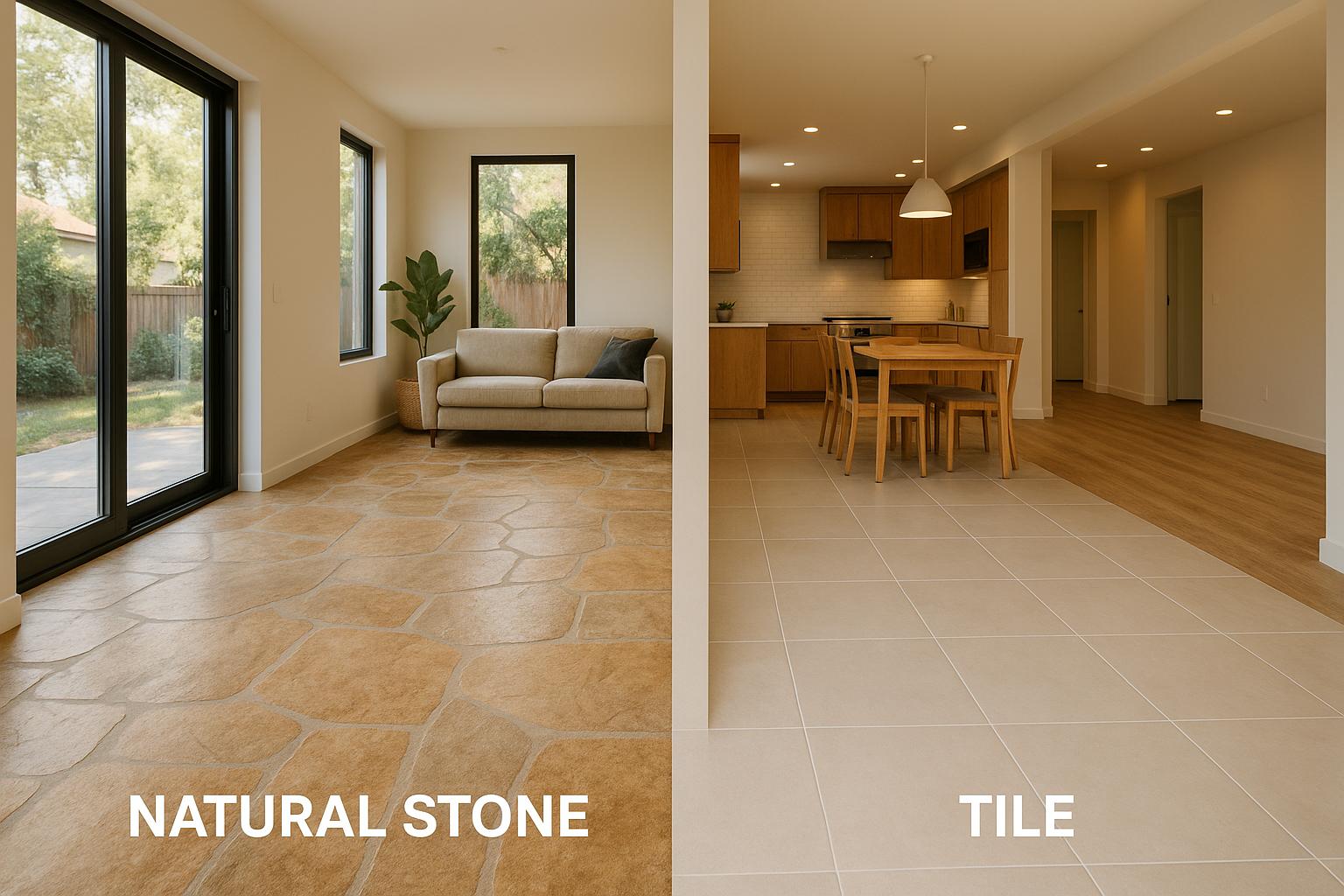
When deciding between natural stone and tile for your home, the choice boils down to cost, maintenance, and longevity. Here's the quick takeaway:
Installation is pricier for natural stone due to its weight and unique patterns, while tiles are easier and cheaper to install. Maintenance varies: stone needs sealing, while tile mostly requires grout cleaning.
| Factor | Natural Stone | Tile |
|---|---|---|
| Material Cost | $4–$300/sq. ft. | $6–$12/sq. ft. |
| Installed Cost | $10–$35/sq. ft. | $9.03–$19.93/sq. ft. |
| Maintenance Cost | $100–$400/year | Minimal (grout cleaning) |
| Lifespan | 50–100 years | Long-lasting (varies) |
| ROI | Up to 90% | Up to 70% |
Want elegance and long-term value? Go with natural stone. Need a budget-friendly, low-maintenance option? Tile is your best bet.

Natural Stone vs Tile Cost Comparison: Materials, Installation, and Lifetime Value

When deciding between natural stone and tile, there are three key expenses to keep in mind: the cost of materials, the labor required for installation, and the ongoing expenses for upkeep. These costs can vary significantly depending on whether you choose natural stone or tile, as well as the specific market conditions in Sacramento. Below, we break down these cost factors in detail.
Natural stone tiles are priced between $4 and $18+ per square foot, while slabs, particularly exotic ones, can range from $75 to $300 per square foot. In Sacramento, granite slabs typically cost around $40 to $70 per square foot for standard patterns, $70 to $100 for mid-range options with more striking designs, and over $100 per square foot for high-end exotic patterns. Marble countertops often match or exceed the mid-range granite prices, while travertine is a more economical choice, costing about $4 to $8 per square foot for basic materials.
Porcelain and ceramic tiles, on the other hand, generally cost between $6 and $12 per square foot. The price difference largely stems from how these materials are sourced and processed. Natural stone must be quarried, cut, and transported, often from distant locations, which adds to its cost. Meanwhile, factory-made tiles benefit from mass production, keeping their prices lower. The rarity of certain stones, natural imperfections, and the labor involved in cutting and finishing also contribute to the higher price of natural stone. These material costs are a significant part of your initial investment.
Labor costs for installing natural stone range from $5 to $15+ per square foot, or approximately $50 to $150 per hour. In Sacramento, tile installation, including materials and labor, typically falls between $9.03 and $19.93 per square foot, depending on the project. The total cost can also vary based on the size and complexity of the job.
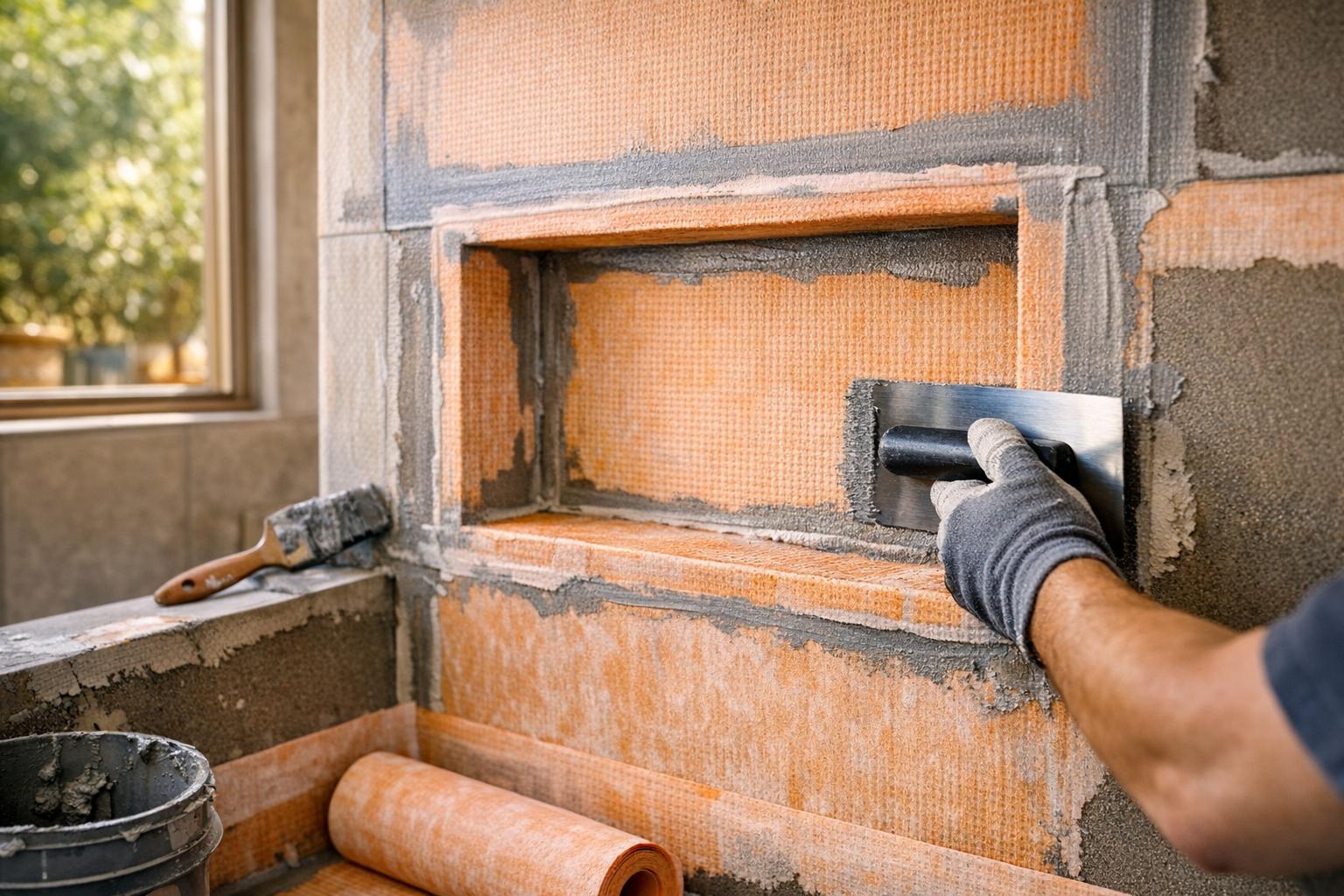
Natural stone requires skilled labor due to its weight and unique patterns, which can drive up installation costs. For example, slate installation costs between $5 and $12 per square foot, while premium stones like marble may cost $7 to $14 per square foot just for labor. These rates reflect typical labor costs in Sacramento. If old flooring needs to be removed, expect to pay an additional $2 per square foot. Factors like the complexity of your layout, whether the substrate requires preparation, and the specific material you choose will all influence the final installation bill.
Natural stone requires regular sealing to protect it from moisture and stains. Sealant costs typically range from $1 to $3 per square foot, and resealing is needed every one to three years, depending on the type of stone and its location. Routine cleaning and resealing are essential to maintaining the stone's appearance and durability over time.
For tile, maintenance is mostly focused on grout care. While glazed ceramic and porcelain tiles are naturally resistant to stains and moisture, grout lines need periodic cleaning and resealing. Both natural stone and tile may require repairs over time. Natural stone can chip or crack and might need refinishing, while damaged tiles often need to be replaced entirely. These ongoing maintenance requirements can have a significant impact on the long-term cost of your chosen material.
In Sacramento, natural stone flooring costs typically range from $10 to $35 per square foot installed, depending on the type of stone. For example, travertine is one of the more affordable options, with material costs running between $4–$8 per square foot and installation costs totaling $10–$18 per square foot. On the higher end, quartzite costs $8–$16 for materials and $14–$32 when installed.
Here's a quick comparison of popular stone types:
| Stone Type | Material Cost per Sq. Ft. | Installed Cost per Sq. Ft. |
|---|---|---|
| Travertine | $4–$8 | $10–$18 |
| Sandstone | $4–$9 | $10–$20 |
| Granite | $5–$12 | $12–$25 |
| Slate | $5–$10 | $10–$22 |
| Marble | $6–$18 | $14–$30 |
| Quartzite | $8–$16 | $14–$32 |
These price ranges also apply to natural stone countertops. Granite countertops, for instance, come with installation costs of $50 to $100 per square foot. Basic granite slabs start at $40 to $70 per square foot, mid-range options with unique patterns cost $70 to $100, and exotic varieties exceed $100 per square foot. When budgeting, remember to account for 10%–15% extra material for waste due to cutting and pattern alignment.
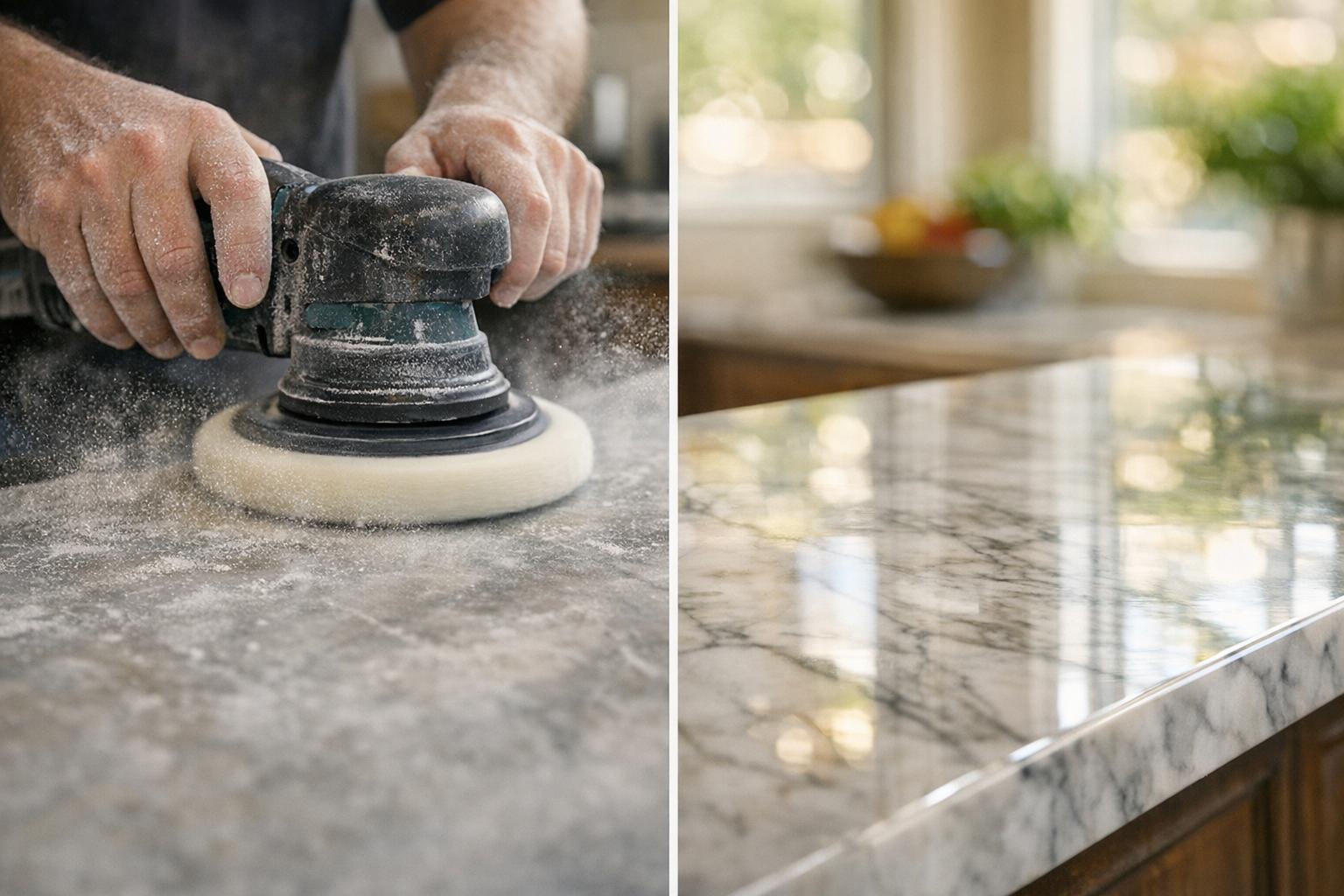
Maintaining natural stone is essential for preserving its beauty and longevity. Sealing is a critical part of upkeep, typically required once or twice a year to protect against stains and water damage. DIY sealing costs about $1 to $3 per square foot, while professional resealing services range from $200 to $600 per visit, averaging $100–$400 annually. Harder stones like granite need less frequent sealing, whereas softer options like marble and limestone are more porous and need more attention.
For daily care, dry mopping helps prevent scratches, and cleaning with pH-neutral products is a must. Acidic cleaners can damage both the stone and its sealant. Over time, if your stone floors develop deep stains or lose their shine, professional restoration and repolishing services are available, costing between $400 and $1,200.
Granite is particularly prized for its durability, often lasting for decades with proper care. Softer stones like marble and limestone, while stunning, require more meticulous maintenance to keep their surface looking pristine.
When it comes to tile options, ceramic and porcelain emerge as budget-friendly choices. Porcelain tiles range from $6 to $12 per square foot for materials alone, offering a far more affordable alternative to most natural stone varieties. Ceramic tiles, on the other hand, often fall on the lower end of this price spectrum, making them one of the most economical options available.
For installation, expect to pay $50–$70 per hour or $5–$15 per square foot, depending on the complexity of the design. Labor costs can vary based on the local market and the expertise required.
One advantage of porcelain and ceramic tiles is their uniformity, which simplifies installation compared to natural stone. Their consistent size and shape make cutting and fitting easier, resulting in clean grout lines without the need for specialized skills. However, if you're considering intricate designs like herringbone or mosaics, be prepared for higher installation costs and longer project timelines. Once installed, the minimal upkeep required makes tile an even more appealing option.
Maintaining tile is refreshingly simple. Glazed ceramic and porcelain tiles only require regular sweeping and mopping to stay in great shape. Natural stone, by contrast, often needs annual sealing, which can cost anywhere from $100 to $400 per year.
Porcelain tiles, with their dense and non-porous surfaces, excel in resisting scratches, stains, and water damage. This makes them particularly suited for areas like bathrooms, kitchens, and even outdoor spaces in Sacramento, where hot, dry summers and occasional winter rains are common. Unlike natural stone, porcelain doesn’t require pH-neutral cleaners or specialized maintenance routines. (An exception is unglazed ceramic tiles, which are porous and need sealing immediately after installation and periodically after that. Even so, this is less demanding than the upkeep for natural stone.)
In Sacramento, natural stone tends to have a higher initial price tag compared to tile. The cost of natural stone flooring, including installation, typically ranges from $10 to $35 per square foot, depending on the type of stone. For example, travertine usually costs around $10 to $18 per square foot, while quartzite can go for $14 to $32 per square foot. On the other hand, porcelain tile materials are more budget-friendly, usually priced between $6 and $12 per square foot. Granite, however, is an exception among natural stones, with material costs alone ranging from $40 to $100 per square foot, which significantly raises the overall expense.
One reason tiles are more affordable is that their uniform sizes make installation simpler and less labor-intensive. For a small bathroom, natural stone can cost three to four times more than tile, and the price gap widens even further for larger spaces like patios. But initial costs are only part of the story - long-term maintenance and repair expenses also play a big role in determining overall value.
While upfront costs set the stage, it’s the long-term expenses that reveal the bigger picture. Maintaining natural stone typically costs around $100 to $400 annually, which adds up to $2,000 to $8,000 over 20 years. In contrast, porcelain tile requires minimal upkeep - routine cleaning is usually sufficient[2,3].
Sacramento's Mediterranean climate - with its dry summers and occasional winter rains - makes sealing natural stone a crucial step to protect it from moisture damage and staining. Repairs for chipped or cracked stone can cost $10 to $30 per square foot or $50 to $300 per tile, while professional restoration services, like repolishing, can range from $400 to $1,200.
Despite these ongoing costs, natural stone is known for its exceptional lifespan. With proper care, it can last 50 to 100 years, making it one of the most durable options available. Porcelain tile is also highly durable, offering excellent resistance to scratches and water damage without the need for extensive maintenance. Sacramento homeowners need to weigh their priorities: the initial affordability and low upkeep of tile versus the timeless elegance and potential longevity of natural stone. Both options have their merits; it all comes down to what aligns best with your long-term plans and budget.
When it comes to selecting between natural stone and tile, the choice often depends on your budget, lifestyle, and future plans. If you're aiming to keep costs down or need a durable option for high-traffic areas like entryways or bathrooms, porcelain tile is a practical pick. It's affordable, easy to maintain, and performs well in Sacramento's climate, offering up to 70% ROI. Thanks to its moisture resistance and low porosity, porcelain tile is ideal for wet spaces, particularly during Sacramento's hot summers and occasional winter rains.
Natural stone, however, stands out for its distinct beauty and impressive return on investment. With proper care, natural stone flooring can last 50 to 100 years, and it can deliver up to 90% of the installation cost back in resale value. Granite is a popular choice for Sacramento kitchens and bathrooms due to its heat resistance and durability, while quartzite, known for being one of the hardest materials on the Mohs Hardness Scale, is perfect for homeowners seeking a long-lasting option.
Professional installation is key for both materials. Skyline Tile’s expertise in custom tile and stonework ensures precise cuts, proper subfloor preparation, and long-term durability - avoiding the pitfalls of DIY projects that can lead to expensive repairs. Whether you choose the classic appeal of natural stone or the practicality of porcelain, expert installation safeguards your investment.
To cut costs, consider removing old flooring yourself, opting for standard tile sizes, and minimizing custom features. Skyline Tile also provides design consultations and a 5-year workmanship warranty, helping Sacramento homeowners make smart choices that fit their budgets and project goals.
When it comes to long-term costs, tile flooring often proves to be the more budget-friendly option. It’s low-maintenance, doesn’t usually require sealing, and rarely needs repairs, keeping expenses to a minimum over time.
In contrast, natural stone flooring tends to come with higher ongoing costs. To maintain its beauty and durability, regular sealing is often required, and any repairs or replacements can be pricier due to the distinct nature of the material. While natural stone undeniably adds a luxurious and timeless appeal, the upkeep can significantly contribute to its overall cost in the long run.
Natural stone demands more attention when it comes to upkeep. Since it's porous, it requires regular sealing to guard against stains and water damage. On top of that, consistent cleaning is essential to keep it looking its best.
On the other hand, tile - especially glazed ceramic or porcelain - is far simpler to maintain. Its non-porous surface resists stains and typically only needs basic cleaning, with minimal sealing required over time. If ease of maintenance is a priority, tile is often the more practical option.
When deciding between natural stone and tile, it's important to weigh factors like durability, maintenance requirements, and appearance to ensure the material complements your home's design. Another major consideration is cost - natural stone tends to come with a higher initial price tag, whereas tile is often a more budget-conscious choice. Keep in mind the installation process as well, since natural stone typically demands skilled professionals, which can add to labor expenses.
For homeowners in Sacramento, the local climate and soil conditions should also influence your decision. Natural stone might handle the area's hot summers and occasional rainfall more effectively, while certain tiles can deliver impressive durability with less upkeep. Think about your long-term plans to select the material that offers the best balance of performance and value for your home.