
October 27, 2025
Porcelain vs Ceramic Tiles: Which Is Better?
Explore the differences between porcelain and ceramic tiles, including durability, cost, and ideal uses for Sacramento's climate.
Explore the differences between porcelain and ceramic tiles, including durability, cost, and ideal uses for Sacramento's climate.
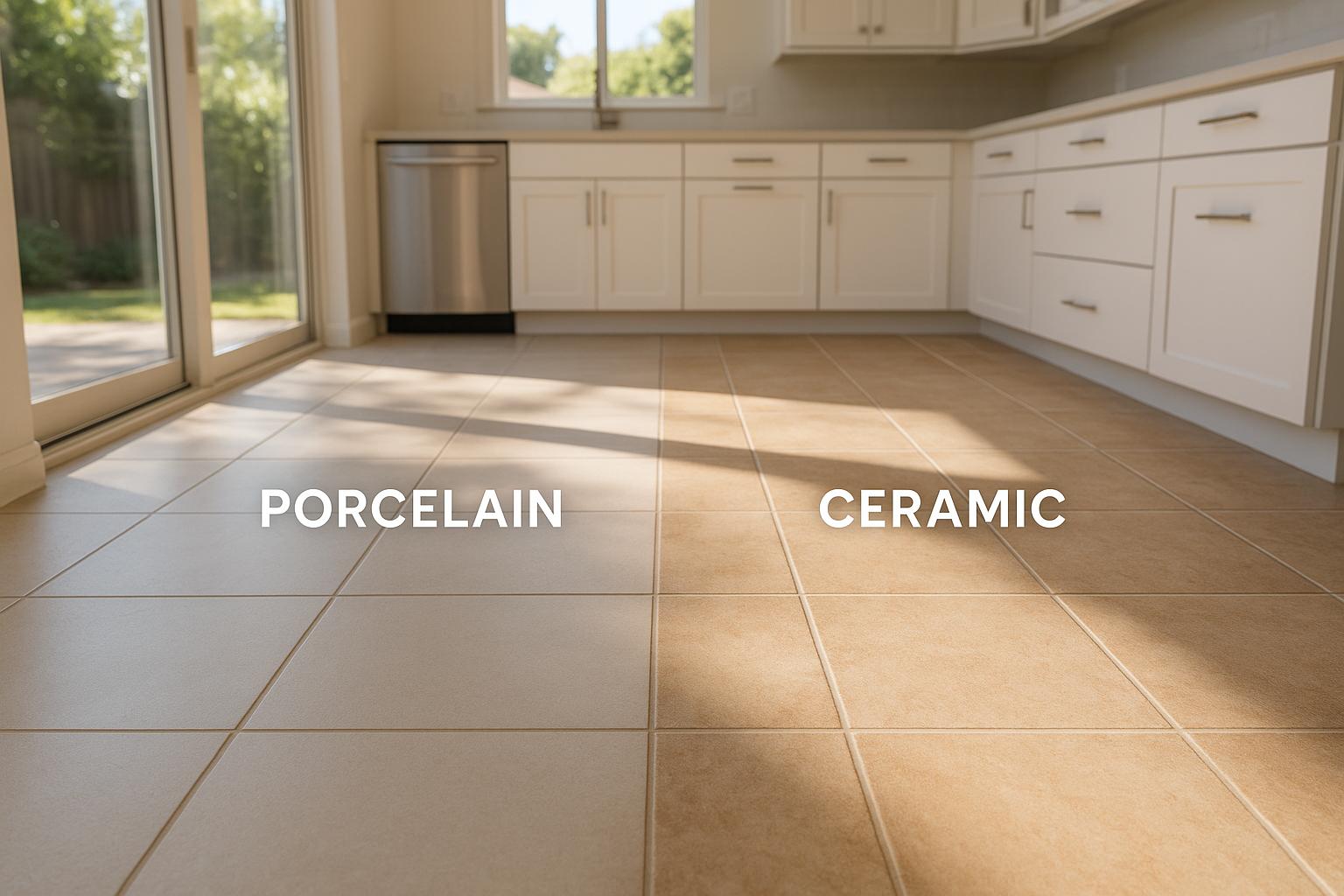
If you're deciding between porcelain and ceramic tiles for your home, here’s the bottom line: Porcelain is more durable and water-resistant, making it ideal for high-traffic and wet areas like bathrooms, kitchens, and outdoor spaces. Ceramic is more affordable and works well for low-traffic, dry indoor areas like bedrooms or living rooms.
| Feature | Porcelain | Ceramic |
|---|---|---|
| Water Absorption | ≤ 0.5% | > 0.5% |
| Durability | High | Moderate |
| Cost | $4–$8/sq ft | $3–$4/sq ft |
| Installation | Challenging (pro help) | Easier (DIY-friendly) |
| Best Use | Wet/outdoor areas | Dry/low-traffic areas |
For Sacramento’s climate - hot summers and rainy winters - porcelain is the better choice for outdoor patios, pool decks, or moisture-prone areas. Ceramic works well indoors where water exposure is minimal. Choose based on your specific project needs and budget.

Sacramento's Mediterranean climate brings specific challenges for tile installations. With scorching summers that often surpass 100°F and rainy winters with significant moisture, tile selection becomes a matter of durability and adaptability. These extreme shifts in weather make water resistance and toughness essential traits for any tile choice.
Porcelain tiles, known for their low water absorption rate (under 0.5%), are an excellent choice for areas prone to moisture, like bathrooms and kitchen backsplashes. Their ability to resist water penetration helps maintain their integrity over time, even in Sacramento's wetter months.
Ceramic tiles, on the other hand, have a higher water absorption rate. While they’re perfectly suitable for dry indoor spaces like living rooms and bedrooms, they’re less ideal for outdoor patios or moisture-heavy environments. This doesn’t mean ceramic tiles can’t handle indoor use - they simply fare better in areas where water exposure is minimal.
When it comes to wear resistance, porcelain tiles stand out. Their manufacturing process results in a harder, more durable surface, making them better equipped to handle heavy foot traffic. This makes porcelain an excellent choice for homes with active outdoor spaces, a common feature in Sacramento. Ceramic tiles, while durable, may not hold up as well under these conditions.
Temperature swings are another factor to consider. Sacramento’s hot days (sometimes hitting 105°F) and cooler evenings can cause tiles to expand and contract. Porcelain tiles manage these fluctuations more effectively, reducing the risk of cracks, particularly in outdoor settings. Ceramic tiles, however, might be more prone to minor cracking over time in such environments.
Sacramento's climate directly impacts how tiles perform over time. For instance, the intense summer heat can cause tiles to expand slightly, while the cooler, damp winters may lead to contraction. Porcelain tiles handle these seasonal changes with ease, resulting in fewer maintenance issues and a longer lifespan.
Rainy months, typically from November through March, bring increased moisture exposure for outdoor tiles. Porcelain's superior water resistance prevents water infiltration that could otherwise damage the substrate or lead to tile failure. Ceramic tiles, being more porous, may allow moisture to seep through, potentially compromising the underlying structure.
For outdoor spaces like pool areas and kitchens, porcelain proves to be a reliable choice. It stands up to chlorine, high surface temperatures, and frequent cleaning, all while resisting fading from Sacramento's intense summer sunlight.
Indoors, both porcelain and ceramic tiles have their strengths. Porcelain works particularly well in high-humidity areas like poorly ventilated bathrooms, while ceramic tiles are a cost-effective option for living rooms and bedrooms, where the air tends to stay dry. For budget-conscious projects, ceramic tiles can offer a practical solution without sacrificing style.
During the region's construction season (March to October), porcelain’s durability can reduce long-term repair costs, while ceramic’s affordability makes it a good fit for less demanding applications.
Choosing the right tile for Sacramento's unique climate requires a close look at how these materials handle the area's temperature swings, moisture levels, and overall wear and tear. Tailoring your selection to these conditions ensures a more durable and lasting installation.
When planning a tile project, understanding the costs, installation challenges, and maintenance needs is crucial for managing your budget. Both porcelain and ceramic tiles come with their own pricing, labor, and upkeep considerations. Let’s break these down to help you make an informed decision.
If you're looking for a cost-effective option, ceramic tiles often fit the bill for many Sacramento homeowners. Standard ceramic tiles for indoor use tend to be more affordable, though prices can climb with intricate patterns or high-end finishes. On the other hand, porcelain tiles typically carry a higher price tag. This reflects their advanced manufacturing process, which enhances their durability. Factors like tile size, detailed finishes, and complex designs can also push up costs for both types.
Porcelain tiles, known for their density and hardness, can make installation a bit trickier - and pricier. Cutting these tiles requires specialized tools and careful handling to avoid damage, which adds to labor costs. Ceramic tiles, being softer and easier to work with, can often be installed more quickly using standard tools. Porcelain installations might also involve additional steps, such as using specific substrates, adhesives, and waterproofing measures, which can extend the project timeline compared to ceramic tile installations.
Maintenance is another important consideration. Porcelain tiles are easier to clean thanks to their non-porous surface, making them more resistant to stains and spills. On the other hand, ceramic tiles, being slightly more porous, may need quicker attention to spills and occasional deep cleaning to maintain their appearance. Ceramic grout often requires more frequent resealing. For repairs, ceramic tiles are more prone to cracking under impact or temperature changes, often necessitating tile replacement. Porcelain’s through-body color helps mask minor chips, making repairs less noticeable.
These factors can help Sacramento homeowners weigh the initial costs against long-term durability and maintenance needs.
When designing your Sacramento home, both porcelain and ceramic tiles provide a wide range of design possibilities, each with its own unique advantages. Knowing the differences between the two can help you achieve the look and functionality you’re aiming for.
Porcelain tiles are incredibly versatile when it comes to design. Thanks to modern manufacturing techniques, porcelain can convincingly replicate natural materials, with colors and patterns running all the way through the tile. This gives the edges and corners a more natural appearance. Popular finishes include polished surfaces for sleek bathrooms, matte textures for modern kitchens, and anti-slip finishes that work well for outdoor areas like patios and pool decks in Sacramento.
Ceramic tiles, on the other hand, are known for their vibrant, long-lasting colors, often achieved through glazed finishes. They shine when it comes to hand-painted designs, intricate geometric patterns, and decorative accent tiles. For Sacramento homeowners looking to create Mediterranean-inspired interiors or lively backsplashes, ceramic tiles offer plenty of artistic possibilities at a more accessible price point.
Porcelain tiles are available in larger formats, with sizes reaching up to 48" x 48". These are ideal for creating seamless, open-concept designs with minimal grout lines, perfect for contemporary Sacramento homes. Ceramic tiles, while typically maxing out at 24" x 24", come in a variety of smaller, decorative sizes like penny rounds, subway tiles, and mosaics. Additionally, porcelain’s denser composition allows for textured surfaces that feel natural and provide better slip resistance, making them a great choice for pools and outdoor spaces. Ceramic tiles, with their glazed surfaces, tend to be smoother and are often used for indoor applications.
These design options allow for a highly personalized look, ensuring that the tiles you choose complement your Sacramento home’s style perfectly.
To make the most of these design possibilities, working with a professional can make all the difference. Skyline Tile provides consultations to help you select tiles that align with both your home’s architecture and any technical requirements.
Custom installations are where both porcelain and ceramic tiles can truly shine. Unique patterns, borders, and focal points can be designed to showcase each tile’s strengths. Skyline Tile’s expertise ensures that technical factors like proper installation methods and Sacramento’s specific climate conditions - such as UV exposure and temperature changes - are taken into account, particularly for outdoor areas.
The material selection process involves reviewing actual tile samples in your home’s lighting. This hands-on step helps avoid costly mistakes and ensures that your final choice matches your vision. Whether you prefer the understated elegance of porcelain or the bold, artistic charm of ceramic, professional guidance ensures your selections not only enhance your home’s value but also elevate your day-to-day enjoyment of the space.
Deciding between porcelain and ceramic tiles for your Sacramento home depends on a few key considerations: where you'll use them, your budget, and how you expect them to hold up over time. Sacramento's climate - hot, dry summers and mild winters - also plays a role in how these tiles perform. Here's a breakdown to help you make the best choice for your project.
Porcelain tiles are the go-to option for areas exposed to moisture or heavy foot traffic, like kitchens and bathrooms. They resist stains and absorb very little water. On the other hand, ceramic tiles work well in dry, low-traffic spaces. Cost-wise, ceramic tiles are more affordable, priced around $3–$4 per square foot, while porcelain tiles range from $4–$8 per square foot but offer better durability and less upkeep over time.
In bathrooms, porcelain is a top choice for shower walls and floors because it handles water exposure exceptionally well. Ceramic tiles can work in low-moisture bathrooms if they're properly sealed.
For outdoor spaces like patios and pool decks, porcelain tiles shine. Their density helps them resist fading and cracking, even with Sacramento's intense UV rays and temperature swings. Ceramic tiles, however, are more prone to weather damage and aren't typically recommended for outdoor use.
Ceramic tiles are perfect for low-traffic areas like bedrooms or decorative accent walls. These spaces don't require the added durability of porcelain, making ceramic a budget-friendly option for such projects.
If you're planning a DIY installation, ceramic tiles are easier to work with. Porcelain, being denser and harder to cut, is better suited for professional installation.
Here's a quick comparison to highlight the differences between porcelain and ceramic tiles:
| Feature | Porcelain | Ceramic |
|---|---|---|
| Water Absorption | 0.5% or less | 0.5% or more |
| Firing Temperature | 2,200–2,500°F | 1,800–2,000°F |
| Material Cost | $4–$8 per sq ft | $3–$4 per sq ft |
| Installation Cost | $10–$15 per sq ft total | $5–$10 per sq ft total |
| Durability | Excellent for high-traffic and wet areas | Good for low-traffic, dry areas |
| Outdoor Use in Sacramento | Highly recommended | Not recommended |
| DIY Installation | Difficult; professional help suggested | Easier for homeowners |
| Stain Resistance | Excellent | Good (if glazed) |
| Design Options | Often available in larger sizes | Commonly in standard sizes |
| Best Uses | High-traffic, wet rooms, outdoor spaces | Low-traffic, indoor areas, decorative accents |
For durability and performance, look for tiles with a PEI rating of 3, 4, or 5. Both porcelain and ceramic tiles can last for decades - up to 50 years or more - if installed and maintained properly. Balancing upfront costs with long-term benefits will help you choose the right tile for your Sacramento home.
Deciding between porcelain and ceramic tiles comes down to your project's specific needs, your budget, and Sacramento's climate. Both options can last over 50 years with proper care and installation, but they shine in different scenarios.
Porcelain is the go-to choice for areas exposed to moisture or heavy foot traffic. With an impressively low water absorption rate of 0.5% or less, porcelain tiles are ideal for Sacramento's rainy winters, as well as bathrooms, kitchens, and outdoor spaces. While they may cost more initially, their durability and ability to withstand tough conditions often justify the investment.
Ceramic, on the other hand, is perfect for budget-conscious indoor projects in low-traffic areas. They’re easier to install, making them a favorite for DIY enthusiasts. Plus, ceramic tiles tend to stay cooler underfoot, a feature that can enhance comfort during Sacramento's warmer months.
For outdoor spaces or areas prone to moisture, porcelain is a must due to its superior resistance to weather conditions. Make sure to check for the PTCA Certification Mark to confirm you're getting genuine porcelain that performs as expected in wet or outdoor environments.
When weighing your options, consider the balance between upfront costs and long-term durability. Porcelain’s higher price tag can lead to savings over time with less maintenance and fewer replacements, while ceramic tiles deliver excellent value for indoor spaces that don’t face as much wear and tear. Choose the tile that best aligns with your project's demands and your budget, ensuring a result that lasts for decades.
When deciding between porcelain and ceramic tiles for your Sacramento home, it’s important to weigh your specific needs and how the tile will be used.
Porcelain tiles stand out for their density, durability, and excellent water resistance, making them perfect for high-traffic areas, bathrooms, or even outdoor spaces. On the other hand, ceramic tiles tend to be more affordable, easier to cut (a bonus for DIY projects), and naturally stay cooler - an appealing feature for Sacramento’s warm climate.
Think about your budget, the amount of foot traffic the area will see, and whether the tiles will face exposure to moisture. While porcelain often requires professional installation due to its toughness, ceramic tiles are easier to handle for those tackling home projects themselves.
Porcelain tiles are incredibly easy to care for, thanks to their low porosity. This feature makes them highly resistant to stains, dirt, and moisture. Most of the time, a simple routine of sweeping or vacuuming, paired with the occasional mop, is all it takes to keep them looking spotless. Plus, their grout lines are less likely to stain, cutting down on the need for frequent resealing.
Ceramic tiles are also straightforward to maintain, though their slightly higher porosity can lead to dirt and stains building up in the grout over time. As a result, you might need to deep clean or reseal them periodically to preserve their fresh look. While both materials are durable, porcelain generally demands less effort to keep in top shape over the years.
Yes, ceramic tiles work well in high-moisture areas, provided they’re sealed correctly. Since ceramic tiles are naturally more porous than porcelain, sealing is key to minimizing water absorption and protecting them from potential damage over time.
In spaces like bathrooms or kitchens, consistent upkeep and resealing are crucial to maintaining their durability. With the right care, ceramic tiles can be a long-lasting and attractive option for areas prone to moisture.