
January 11, 2026
Top 5 Outdoor Tile Materials for Patios
Compare the top five patio tile materials - porcelain, natural stone, stamped concrete, composite decking, and custom tiles - by durability, cost, and Sacramento climate fit.
Compare the top five patio tile materials - porcelain, natural stone, stamped concrete, composite decking, and custom tiles - by durability, cost, and Sacramento climate fit.
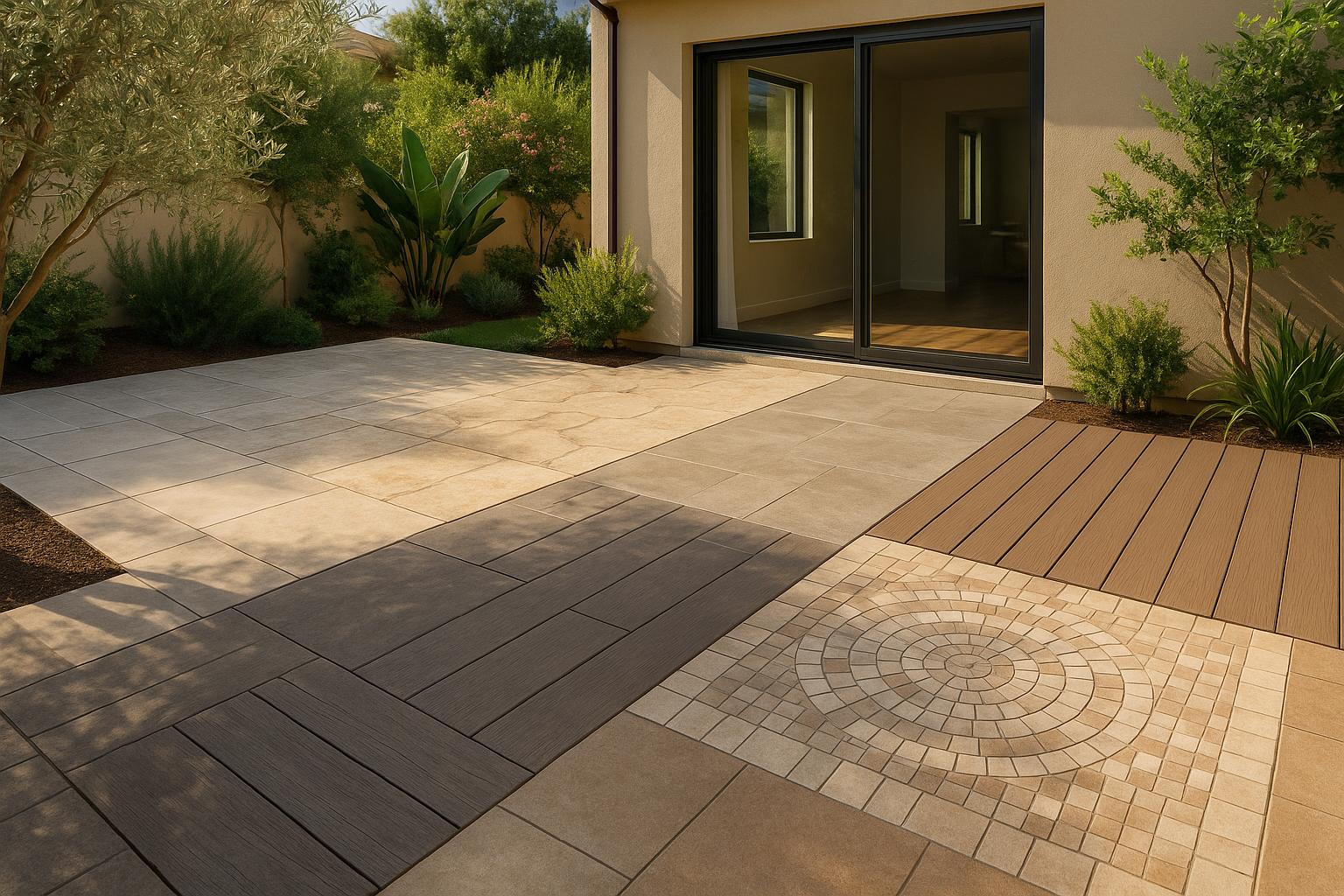
Choosing the right tile for your patio is essential, especially in Sacramento, where hot summers and rainy winters put outdoor surfaces to the test. The wrong material can fade, crack, or become slippery, while the right one balances durability, style, and low maintenance. Here’s a quick breakdown of the best options:
Each has pros and cons, so consider your climate, budget, and aesthetic goals before deciding.
Porcelain tiles are a top-notch choice for patios in Sacramento. Thanks to their manufacturing process - fired at extremely high temperatures - they boast a dense and durable surface. Unlike standard ceramic tiles, porcelain has a water absorption rate of less than 0.5%. This makes it well-suited to handle Sacramento's fluctuating weather.
Another perk? Porcelain tiles offer fantastic visual versatility. Modern production techniques allow these tiles to mimic the look of natural stone, wood, or concrete so convincingly that you can achieve the upscale appearance of materials like travertine or slate - without the headaches of maintaining them. Plus, because the color runs throughout the tile, chips and scratches are far less noticeable.
Porcelain tiles are built to handle just about anything. Their dense composition makes them resistant to scratches, stains, and heavy foot traffic, so even patio furniture won't leave unsightly marks. This toughness ensures they hold up well in high-use areas.
They also shine when it comes to freeze-thaw resistance. Sacramento may not have harsh winters, but the occasional cold snap can cause less durable materials to crack when moisture freezes. Porcelain, with its low water absorption, avoids this issue entirely. It stays intact through temperature swings, from chilly winter nights in the 40s°F to scorching summer days over 100°F.
Another bonus? Porcelain is UV-resistant. While some materials fade or discolor under Sacramento’s intense sun, porcelain retains its color year after year.
Porcelain tiles come with a price tag that reflects their quality and variety. Materials range from $2 to $30 per square foot, while labor costs typically fall between $4 and $14 per square foot. Basic designs are more affordable, while premium options that mimic natural stone or feature intricate patterns sit on the higher end of the spectrum.
"Porcelain tiles tend to be more expensive than ceramic tiles, which may be a consideration for budget-conscious homeowners." - Sunwin
Though the upfront cost might be higher, porcelain tiles offer excellent long-term value. Their durability and minimal upkeep mean you’re less likely to face frequent replacements or repairs.
Porcelain tiles are refreshingly low-maintenance. A quick sweep and the occasional mop with water and mild detergent are usually all you need to keep them looking great. Unlike natural stone, porcelain doesn’t require sealing, as its non-porous surface resists dirt, oil, and other substances. However, grout lines should be sealed annually to prevent staining and moisture issues.
For tiles with textured or matte finishes, a stiff brush can help clean debris from the surface. While porcelain is tough, it’s still a good idea to avoid abrasive cleaners or tools that could dull the finish. That said, its inherent hardness makes it resilient against most cleaning methods.
Porcelain tiles are perfectly suited for Sacramento's climate. During the summer, when temperatures often soar above 95°F, these tiles remain cooler than many other materials. Their light-reflective properties and dense structure make walking barefoot on hot afternoons much more comfortable.
In the rainy winter months, porcelain tiles perform just as well. Water doesn’t seep into the surface, reducing moisture-related problems and allowing the tiles to dry quickly after rain. This also helps minimize slip hazards.
"Porcelain tiles are heavier and more difficult to cut than ceramic tiles, which makes installation more challenging and time-consuming." - Sunwin
The complexities of installation highlight the importance of hiring professionals. Proper preparation, including ensuring a stable substrate, planning for drainage, and using weather-appropriate adhesives, is key to ensuring your patio withstands Sacramento’s seasonal changes. Expansion joints should also be included to accommodate temperature-related expansion and contraction.
For outdoor use, textured or matte-finish porcelain tiles are a smart choice, as they enhance slip resistance in wet conditions. Be sure to select tiles specifically rated for outdoor applications to ensure they meet the durability standards required for long-term performance.
Up next, we’ll dive into the durability and charm of natural stone for outdoor patios.
Natural stone adds a touch of sophistication to outdoor patios. Each piece is distinct, showcasing its own color, texture, and veining, which creates a one-of-a-kind look. Slate, travertine, and flagstone are particularly popular among Sacramento homeowners who want a classic and enduring style.
Slate boasts deep, earthy shades like charcoal gray, green, and burgundy. Its naturally textured surface not only enhances its visual appeal but also provides excellent slip resistance, making it a smart choice for areas prone to getting wet. Travertine, with its warm beige and tan tones, brings a Mediterranean vibe to your space and stays cool to the touch, even under direct sunlight. Flagstone, available in irregular shapes or more uniform cuts, offers a rustic charm that works well with both traditional and modern patio designs. These stones are well-suited to Sacramento's hot summers and occasional chilly winters.
Natural stone tiles have stood the test of time, proving their durability in outdoor settings for centuries. They can handle heavy foot traffic, outdoor furniture, and the inevitable wear and tear of outdoor living. Their ability to endure Sacramento's temperature extremes - from scorching summers to cooler winter nights - makes them a reliable option. Slate, in particular, is known for performing exceptionally well in colder conditions.
However, sealing is a must to protect natural stone in Sacramento's climate. Without it, the stone can absorb water, which can lead to cracking and surface damage during the rainy winter months due to freeze-thaw cycles. Regular sealing forms a protective barrier, helping to prevent water absorption and keeping the stone looking its best over time.
Natural stone is a premium option for patios, reflecting both its quality and aesthetic charm. Materials typically cost between $5 and $35 per square foot, while labor expenses range from $8 to $20 per square foot. More affordable choices include sandstone, limestone, and travertine. On the higher end, materials like soapstone, granite, and slate can push the total cost up to $50 per square foot for high-end installations. While the upfront costs are higher compared to synthetic materials or basic concrete, natural stone's durability and timeless beauty make it a worthwhile investment in the long run.
To keep natural stone in top condition, reseal it every one to three years. Regular care includes sweeping away debris and cleaning with water and a pH-neutral cleaner. Avoid acidic cleaners, as they can damage the surface.
Natural stone performs exceptionally well in Sacramento's Mediterranean climate when installed and maintained correctly. Travertine remains cool underfoot, making it ideal for sunny areas. During the rainy season, sealing the stone before the first downpour helps it repel water, reducing the risk of freeze-thaw damage. Proper grading and drainage are also essential. Additionally, the textured surfaces of slate and flagstone provide extra slip resistance during wet weather, adding a layer of safety to your outdoor space.
Next, explore stamped and stained concrete as a budget-friendly yet stylish patio option.
Stamped and stained concrete is a budget-friendly way to create a stylish patio. This option lets you replicate the look of pricier materials like natural stone, brick, or even wood. The process involves two key steps: stamping patterns into freshly poured concrete and applying stains to give the surface color and depth. With an array of patterns and colors to choose from, you can design a patio that complements your home's aesthetic perfectly. This adaptability makes it a reliable choice for various design preferences.
Whether you're aiming for the charm of cobblestone, the elegance of slate, or the clean lines of tile, stamped concrete can deliver a similar appearance. It's no wonder many homeowners in Sacramento turn to this option for creating an attractive outdoor space without breaking the bank.
Concrete is a tough material, making it a solid choice for patios. It handles Sacramento's hot summers and occasional freeze-thaw cycles with ease. When installed and maintained correctly, it resists cracking and holds up well against the elements.
Stamped and stained concrete offers a range of pricing to fit different budgets. Material costs typically range from $2 to $30 per square foot, while labor adds another $4 to $14 per square foot. Simpler designs are more affordable, while high-end options - such as those that mimic natural stone or include intricate patterns - fall on the pricier side.
To keep stamped concrete looking its best, regular cleaning and sealing are essential. Sealing not only enhances the surface's appearance but also protects it from stains and moisture. Addressing small cracks promptly can also extend the life of your patio and maintain its durability.
Concrete is well-suited for hot climates, making it a popular choice for Sacramento patios. In the city's Mediterranean climate - where summer temperatures often soar past 100°F and winter nights can get chilly - proper installation and sealing are key. These measures help protect the surface from water damage and cracking caused by freeze-thaw cycles. Additionally, good drainage prevents water pooling, which can lead to further issues.
Next, take a look at composite decking as another exciting option for outdoor spaces.
Composite decking is a modern choice for outdoor patio designs, offering a blend of practicality and style. Unlike traditional tiles, these boards are crafted from a mix of wood fibers and recycled plastic, giving them the warm, natural look of wood without the hassle of high maintenance. This makes composite decking a popular option for homeowners in Sacramento who want the charm of wood but need something tough enough to handle the local climate.
The way composite decking is installed sets it apart from standard tile options. Boards are secured to a frame, creating an elevated surface that allows for natural drainage. They come in a range of colors and textures, from deep browns to light cedar tones. Many brands also offer grooved or wood-grain finishes, adding to their realistic wood-like appearance.
When it comes to durability, composite decking stands out. Thanks to its plastic content, it resists rot, mold, and insect damage - issues that often plague traditional wood decks. Plus, it won’t splinter or warp, making it a safer choice for bare feet, especially during Sacramento's hot summers.
However, there are some considerations to keep in mind. Prolonged exposure to UV rays can cause fading, though many modern options include UV inhibitors to reduce this effect. Additionally, composite boards can expand and contract with temperature changes, so following proper installation guidelines - like allowing adequate spacing - is key to avoiding buckling or other issues.
One of the biggest perks of composite decking is how little upkeep it requires. A quick sweep to clear away debris and an occasional wash with soap and water are usually all it takes to keep the surface looking great. Unlike sealed concrete or natural stone, there’s no need for regular reapplication of protective coatings.
For tougher stains, a soft-bristle brush and mild detergent usually do the trick, making maintenance simple and hassle-free.
Sacramento’s Mediterranean climate plays a significant role in the performance of composite decking. The material handles the region’s dry heat well, though darker colors can get quite warm under direct sunlight during peak summer months. Lighter shades are a more comfortable option for patios exposed to southern sunlight.
The limited rainfall in Sacramento works to composite decking’s advantage. It dries quickly after rare winter storms, and its drainage-friendly design helps prevent water pooling. However, proper ventilation beneath the deck is critical to avoid moisture buildup, which could lead to mold growth on the underside. Ensuring good airflow and installing the boards with a slight slope for runoff can help extend the deck’s lifespan in this environment.
Next, take a look at custom outdoor tile options for tailored designs.

When standard tile options just don't cut it, custom outdoor tiles open the door to a patio that's truly your own. By expanding on the strengths of standard tiles, custom solutions offer more flexibility in design and better performance. Skyline Tile specializes in crafting high-quality, precision-made custom tile installations tailored to thrive in Sacramento's unique climate.
This tailored approach goes beyond aesthetics - it’s about creating a functional, durable outdoor space. You'll work closely with experts to choose the best materials, design layouts, and add functional features that seamlessly blend with your home and landscape. The process kicks off with a design consultation, giving you the chance to explore tile materials, patterns, and color schemes. You'll also discuss practical needs like slip resistance, heat absorption, and effective drainage.
A well-installed patio is built to last, and Skyline Tile delivers on that promise with expert installation, waterproofing, and a 5-year workmanship warranty. This ensures your patio meets the highest quality standards. Durability starts with selecting the right materials and relies on proper installation techniques to stand the test of time.
Maintenance depends on the material you choose, but expert installation makes it easier. For instance, natural stone might need occasional resealing, while porcelain tiles usually require nothing more than regular cleaning with mild soap and water. Grout lines should be cleaned and maintained to keep the patio looking fresh. Skyline Tile also provides maintenance and restoration services to help your outdoor space stay in top shape for years to come.
Sacramento’s weather - hot, dry summers and mild, rainy winters - calls for materials that can handle these extremes. Custom tile solutions allow you to opt for lighter or heat-reflective materials, keeping your patio comfortable even on scorching days. Drainage channels and slight slopes are incorporated to prevent water pooling during the rainy season, while careful substrate preparation addresses soil challenges in the area. For colder months, heated flooring systems can be added, making your outdoor space functional and cozy all year long.
The table below provides a quick comparison of key features:
| Feature | Benefit |
|---|---|
| Durability | Expert installation and 5-year warranty ensure long-lasting quality. |
| Maintenance | Simplified upkeep with material-specific care options. |
| Climate Adaptability | Designed to handle Sacramento's hot summers and mild, wet winters. |
If you're a Sacramento homeowner trying to choose the best patio tile material, this table offers a clear, side-by-side comparison of the most popular options. It highlights important factors like durability, cost, maintenance, and performance in Sacramento's climate.
| Material | Durability & Lifespan | Cost Range (per sq. ft.) | Maintenance Needs | Sacramento Climate Performance | Design Options | Slip Resistance |
|---|---|---|---|---|---|---|
| Porcelain Tiles | Extremely durable with minimal water absorption | $5–$25 | Low – simple cleaning with mild soap and water | Excellent – handles heat well and resists moisture | Wide variety, including options that mimic wood or stone | Good to excellent; textured finishes improve grip |
| Natural Stone (Slate, Travertine, Flagstone) | Very durable; granite and slate are highly resistant, while travertine needs more care | $10–$50 | Moderate to high – requires resealing and careful cleaning | Good – lighter stones stay cooler, and sealing protects against moisture | Offers timeless beauty with natural variations and tones | Varies – textured surfaces like slate provide better traction |
| Stamped & Stained Concrete | Sturdy and great for heavy traffic; proper installation prevents cracking | $8–$18 | Moderate – resealing and proper sealing are necessary | Fair to good – can absorb heat; drainage is key | Customizable with patterns and colors mimicking stone or brick | Moderate; textured finishes improve safety |
| Composite Decking | Durable and resistant to rot, insects, and fading | $15–$35 | Very low – occasional cleaning is sufficient | Fair – may get warm in direct sun; adding shade helps | Limited to plank designs in various colors and wood-grain textures | Good when dry; slippery when wet |
| Skyline Tile Custom Solutions | Durability depends on chosen materials; backed by a 5-year workmanship warranty | Varies by material and design; contact for quote | Varies – expert advice simplifies upkeep | Excellent – tailored solutions for Sacramento's climate | Fully customizable with patterns, colors, and materials | Customizable – slip-resistant features can be added |
This table simplifies the decision-making process by summarizing the key features of each material. Whether you prioritize durability, cost, or design flexibility, you can quickly find the option that fits your needs.
After exploring the unique strengths of each material, it's clear that your choice depends on the specific needs of your outdoor space. We've examined key factors like durability, maintenance, and climate resilience - each playing a role in how well a material performs in Sacramento's environment.
Porcelain tiles stand out for their low maintenance and design versatility. They handle Sacramento's temperature swings and moisture challenges exceptionally well, all while offering a mid-range price point.
Natural stone, such as slate, travertine, and flagstone, brings a classic and sophisticated aesthetic to any space. However, these materials require regular sealing to withstand winter rains and maintain their beauty over time.
Stamped and stained concrete is a cost-effective option that replicates the look of more expensive materials. While it offers great customization, it does need proper installation, good drainage, and periodic resealing to prevent cracks.
Composite decking offers the charm of wood without the hassle of lumber upkeep. It’s a durable choice but can heat up under direct sunlight, so adding shade structures can enhance comfort.
For tailored solutions, Skyline Tile's outdoor stonework services combine expert design advice with high-quality materials suited to Sacramento's weather. Their 5-year workmanship warranty covers slip-resistant features, drainage solutions, and designs that balance style with functionality.
When deciding, think about how you'll use the space. For high-traffic areas, durable options like porcelain or natural stone are ideal. If aesthetics are your top priority, the timeless beauty of natural stone might be worth the extra maintenance. For those on a budget, stamped concrete or carefully chosen porcelain tiles can still achieve stunning results.
Ultimately, selecting a material that can handle both the heat and occasional moisture will ensure your outdoor space remains a worthwhile investment for years to come.
When selecting outdoor tiles for a patio in Sacramento, it’s essential to prioritize durability, water resistance, and the ability to handle the region's weather extremes - think scorching summers and rainy winters. The materials you choose should hold up against temperature swings without cracking or losing color.
Porcelain tiles are a standout option. They’re tough, resist wear, and have low water absorption, making them ideal for outdoor use. If you’re after a classic, elegant look, natural stone options like slate or travertine are great choices. While they perform well outdoors, they may need sealing to boost their longevity. For a more budget-friendly alternative, concrete tiles are worth considering. They’re adaptable and can handle the elements well when sealed properly.
Your decision will ultimately come down to your budget, how much maintenance you’re willing to take on, and the style you envision for your patio.
Natural stone tiles often demand more upkeep than porcelain tiles. Their porous nature means they need regular sealing to guard against moisture, stains, and weather-related wear. Plus, cleaning them requires a delicate touch to prevent scratches or surface damage.
Porcelain tiles, however, are non-porous and incredibly durable, making them much simpler to care for. They naturally resist stains, moisture, and fading, needing just a quick clean with mild soap and water now and then. For those looking for a hassle-free option, porcelain tiles tend to be the go-to choice.
Custom outdoor tiles give you the chance to transform your patio into a space that reflects your unique taste and fits seamlessly with your outdoor surroundings. With a wide range of choices in color, texture, and patterns, they allow you to create a patio that harmonizes beautifully with your home and landscaping.
Beyond their visual appeal, custom tiles can add real value to your property by crafting an outdoor area that's both distinctive and high-quality. These tiles can also be tailored to meet practical needs, such as withstanding harsh weather or offering slip-resistant surfaces for added safety. By opting for custom tiles, you can achieve a combination of style, functionality, and durability that standard options often can't match.